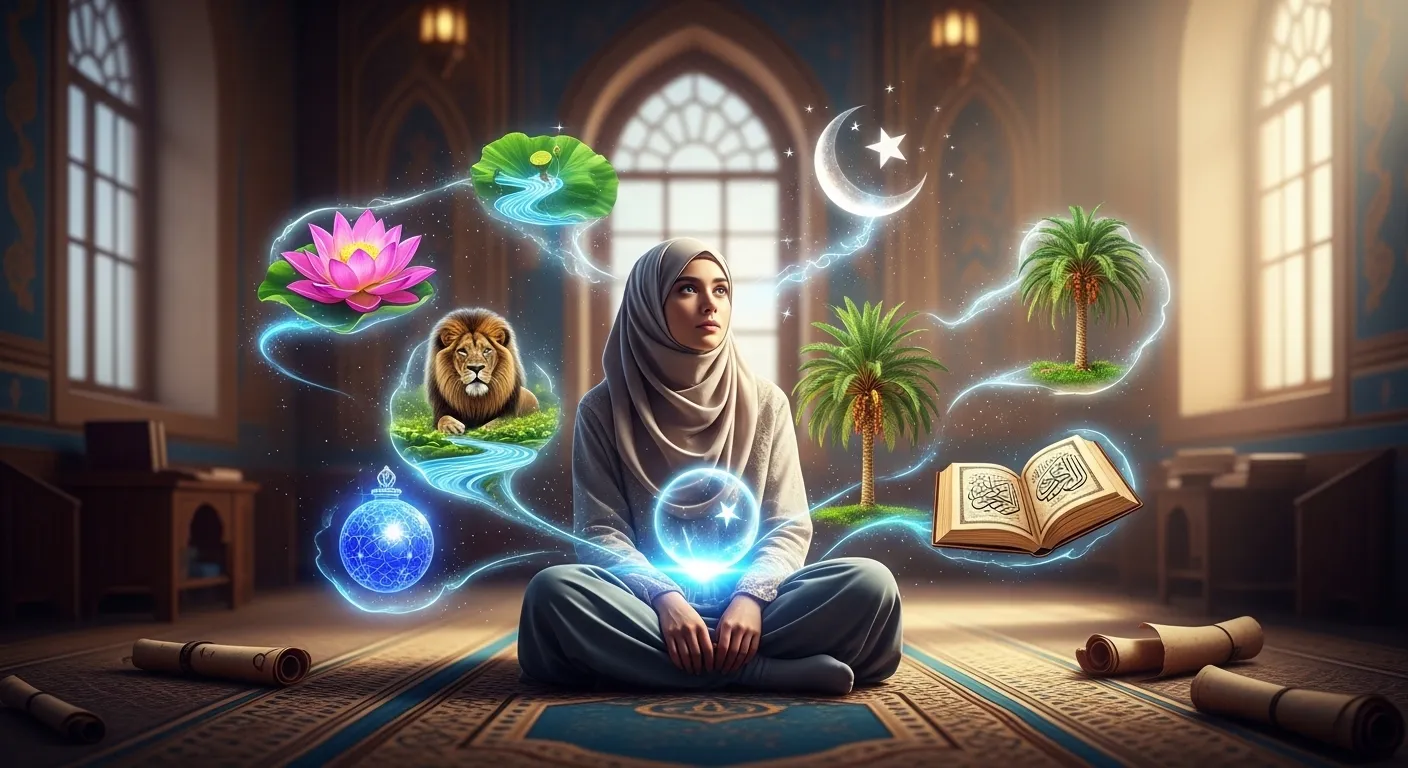
I still remember that night so clearly it felt so real that I couldn’t just ignore it. I had seen a strange dream, one that stayed with me even after I woke up. At first, I tried to brush it off, thinking it was just my mind playing tricks.
Thank you for reading this post, don't forget to subscribe!But deep down, I felt like there was something more to it, something meaningful. Have you ever felt that way too? Like a dream is trying to tell you something?
I started searching for answers, and that’s when I came across the concept of Islamic dream meanings. I realized that in Islam, dreams are not always random some of them can carry messages, guidance, or even warnings. That changed the way I looked at my own dream completely.
Instead of ignoring it, I began to reflect on it. I asked myself what it could mean, what it was trying to show me about my life, my emotions, or even my faith. Slowly, I started to understand that dreams can sometimes be a way for our subconscious or even something deeper to communicate with us.
So if you’ve ever had a dream that stayed with you, just like mine did, you’re not alone. Let’s explore together what Islamic dream meanings really are, and how they might be guiding us in ways we don’t always realize.
Understanding Dreams Through the Islamic Dreams Guide
In Islamic teachings, dreams are generally divided into three types:
- True Dreams (Ru’ya) – These come from Allah and often carry guidance or good news.
- Disturbing Dreams (Hulm) – These come from negative influences and create fear or anxiety.
- Everyday Dreams – These are reflections of your daily thoughts and experiences.
When I first learned this, it helped me stop overthinking every dream. Not all dreams are spiritual messages but some truly are.
The key is to reflect on how the dream made you feel. Was it peaceful? Confusing? Fearful? Your emotions are often the first clue.
Psychological vs Spiritual Meaning of Dreams
From a psychological point of view, dreams are a way for your brain to process emotions, stress, and memories.
But spiritually, especially in the Islamic dreams guide, dreams are more than that they can be:
- A reminder to stay on the right path
- A warning about something in your life
- A reflection of your inner spiritual state
For example, if you dream about being lost, psychologically it might mean confusion. Spiritually, it could mean you are drifting away from your purpose or faith.
I once had a dream where I kept searching for something but couldn’t find it. Later, I realized it reflected my own confusion in life and also a sign to reconnect spiritually.
Common Symbols in the Islamic Dreams Guide
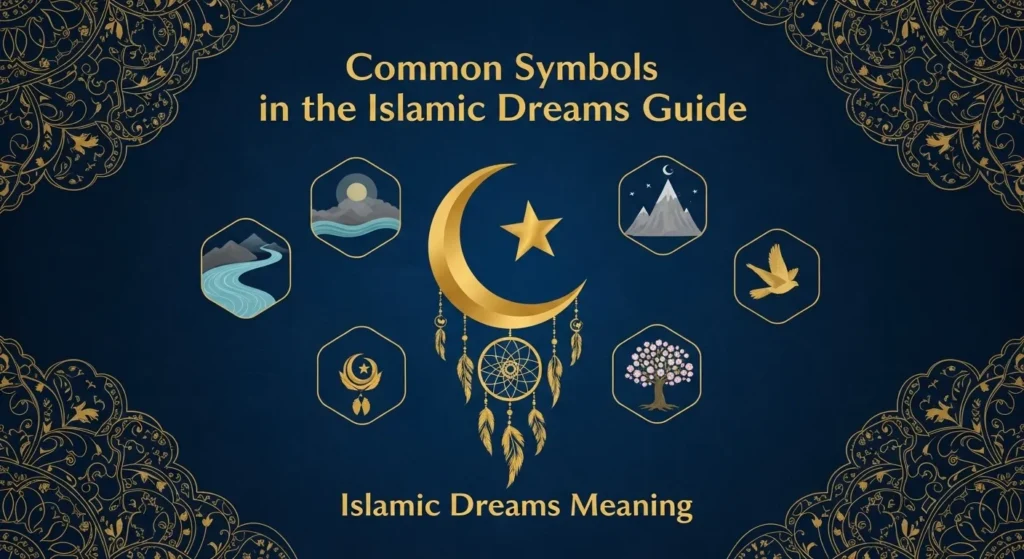
Dream symbols carry deep meanings. Here are a few commonly interpreted ones:
Water
- Clean water → Peace, purity, blessings
- Dirty water → Emotional stress or confusion
Light
- Bright light → Guidance, truth, spiritual awakening
- Dim light → Uncertainty or weak faith
Traveling
- A smooth journey → Progress in life
- Getting lost → Lack of direction
Prayer
- Praying in a dream → Strong spiritual connection
- Missing prayer → Need to reconnect with faith
Each symbol connects both your emotional state and your spiritual journey.
Cultural Interpretations in Islamic Tradition
In Islamic culture, dreams have always held importance. Scholars and spiritual guides believed that dreams could carry divine messages.
Some key cultural insights:
- Good dreams are considered a blessing and should be shared with trusted people
- Bad dreams should not be shared widely and should be ignored
- It is recommended to pray after a disturbing dream
These practices are not just traditions they are tools to protect your mental and spiritual well-being.
I personally found comfort in this approach. Instead of fearing bad dreams, I learned to let them go and focus on positive guidance.
Spiritual Energy & Chakras Connection
While chakras are not traditionally part of Islamic teachings, we can still understand dreams in terms of energy and emotional balance.
Think of it this way:
- Heart energy (emotions) → Dreams about love, loss, or relationships
- Mind energy (clarity) → Dreams about confusion, decisions, or fear
- Soul energy (purpose) → Dreams about guidance, light, or spiritual figures
When your energy is blocked, dreams often reflect it.
For example:
- Feeling stuck in dreams → Emotional blockage
- Falling or خوف → Lack of control or insecurity
- Flying → Freedom and spiritual elevation
I noticed that when I felt emotionally overwhelmed, my dreams became chaotic. But when I felt calm and connected, my dreams felt peaceful and meaningful.
Real-Life Dream Experiences (Relatable Examples)
Let me share a few real-life style examples that might feel familiar:
1. Dream of Losing Something
I once dreamed I lost something important. I kept searching but couldn’t find it.
Meaning: It reflected my fear of losing control in life and spiritually, a reminder to trust Allah more.
2. Dream of Light Guiding the Way
A bright light appeared and showed a path.
Meaning: A sign of guidance and clarity possibly a spiritual awakening.
3. Dream of Being Chased
This is very common.
Meaning: Psychologically, it shows anxiety. Spiritually, it may indicate avoiding responsibility or truth.
4. Dream of Praying
Praying peacefully in a dream.
Meaning: A strong connection with faith and inner peace.
5. Dream of Falling
Falling endlessly without control.
Meaning: Fear, insecurity, or feeling unsupported in real life.
How to Interpret Your Dream (Simple Guide)
If you want to understand your dream using the Islamic dreams guide, follow this simple method:
- Recall the details – What exactly happened?
- Notice your emotions – How did you feel?
- Identify symbols – Water, light, people, actions
- Connect to real life – What are you going through?
- Reflect spiritually – Is this a message or just stress?
Over time, you’ll start understanding your dreams more clearly.
FAQs
1. Are all dreams meaningful in Islam?
No. Some dreams are just reflections of daily life, while others may carry spiritual meaning.
2. What should I do after a bad dream?
You should ignore it, seek protection through prayer, and avoid sharing it widely.
3. Can dreams predict the future?
Some true dreams may hint at future events, but not all dreams are predictive.
4. Why do I keep seeing the same dream?
Recurring dreams often reflect unresolved emotions or spiritual messages.
5. Is it okay to share good dreams?
Yes, but only with people who wish you well.
Conclusion
Dreams are a bridge between your mind, heart, and soul. Through the lens of the Islamic dreams guide, they become more than just images they become guidance, reflection, and sometimes even healing.
Stay connected to your faith, trust your intuition, and don’t rush to judge every dream. Some are just thoughts but others might be gentle signs guiding you toward a better path.

I am inspired by Jack London, a legendary storyteller known for his adventurous spirit and powerful tales of survival and nature. I love exploring great literature, deep stories, and creative ideas that spark imagination. I also enjoy discovering unique content and experiences online at flirtzdream.com.