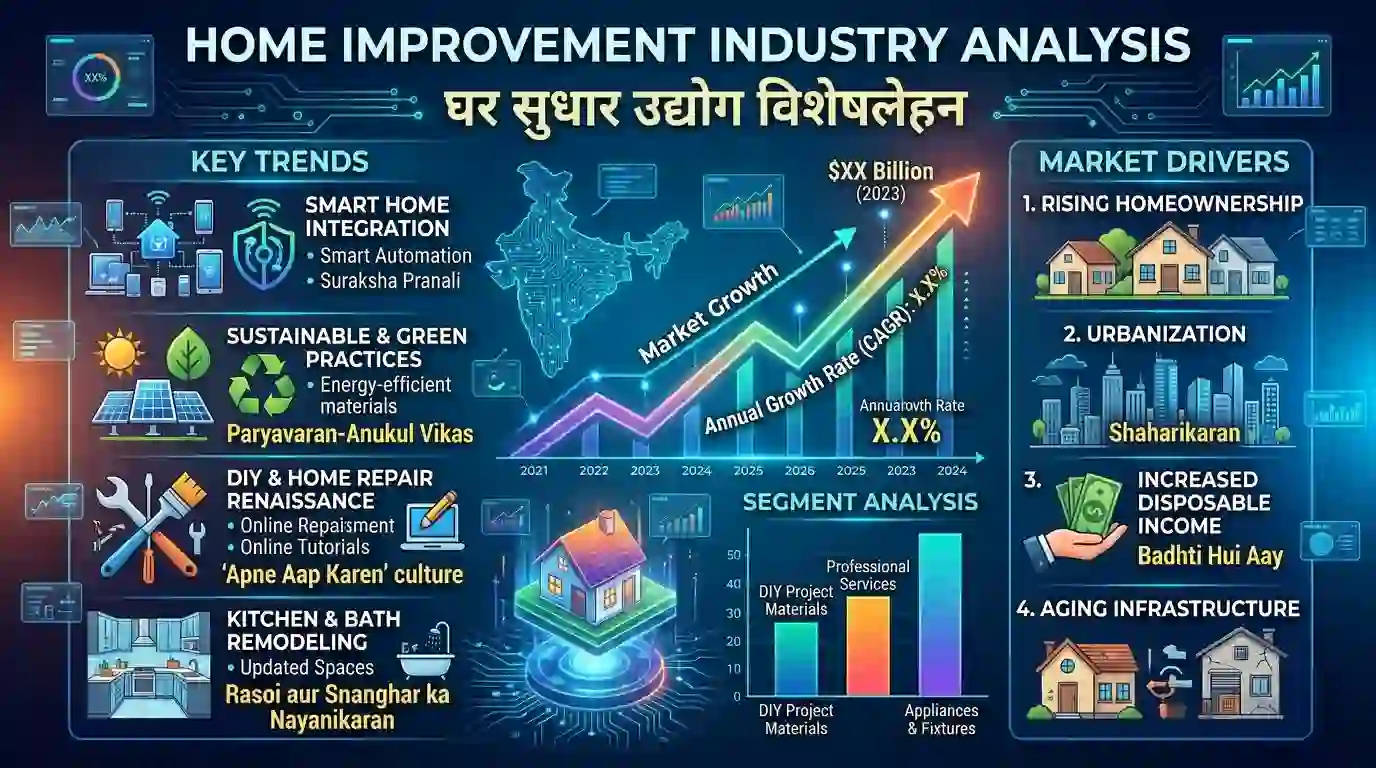
A home improvement industry analysis examines the size, growth, trends, challenges, and future opportunities of the U.S. home improvement market. It helps homeowners, contractors, investors, and business owners understand consumer demand, renovation spending, labor costs, competition, and emerging opportunities in residential remodeling and repair.
Thank you for reading this post, don't forget to subscribe!Key Takeaways
- The U.S. home improvement industry covers remodeling, repairs, renovations, maintenance, and home upgrades.
- Aging homes and changing homeowner needs continue to support demand for remodeling services.
- Labor shortages, material prices, and borrowing costs influence project budgets.
- Energy efficiency, smart home technology, and aging-in-place renovations offer business opportunities.
- Contractors who provide transparent pricing, quality workmanship, and reliable service can build stronger businesses.
Home improvement industry analysis
Introduction
The U.S. home improvement industry plays an important role in the housing and construction economy. It includes everything from kitchen and bathroom remodeling to roofing, flooring, painting, plumbing, landscaping, and energy-efficient upgrades. Homeowners spend money on these services to maintain property values, improve comfort, and adapt their homes to changing needs.
A home improvement industry analysis helps business owners, contractors, investors, and marketers understand how this market operates. It examines market size, consumer spending, industry trends, competition, economic conditions, and future growth opportunities.
The market also faces challenges, including higher material costs, labor shortages, inflation, and changing consumer budgets. Understanding these factors can help businesses make better decisions, choose profitable services, and identify areas where customer demand remains strong.
What Does Home Improvement Industry Analysis Mean?
Home improvement industry analysis is the process of studying the residential renovation, repair, and remodeling market to understand its current position and future potential.
It examines several important factors:
- Market size: How much homeowners and professionals spend on improvement products and services.
- Consumer demand: Which renovation and repair services customers need most.
- Industry trends: How technology, housing conditions, and lifestyle changes affect the market.
- Competition: How contractors, retailers, manufacturers, and service providers compete.
- Economic factors: How interest rates, inflation, wages, and material prices influence spending.
- Growth opportunities: Which services and customer groups offer potential for business expansion.
This type of research is commonly used by contractors planning to launch businesses, established companies entering new markets, investors evaluating home improvement companies, and marketers researching profitable opportunities.
U.S. Home Improvement Industry Overview in 2026
The American home improvement market remains a major part of the residential construction industry. However, its performance varies across products, professional services, and individual remodeling categories.
According to the Home Improvement Research Institute (HIRI), the U.S. home improvement products market is projected to reach $540.1 billion in 2026, representing 2.6% growth compared with 2025. HIRI also projects average annual growth of 3.8% from 2027 through 2029. HIRI
Harvard University’s Joint Center for Housing Studies provides another important measure. Its October 2026 Leading Indicator of Remodeling Activity reports that home improvement and repair spending is expected to remain relatively flat through late 2027. Joint Center for Housing Studies
These figures measure different parts of the industry, so they should not be treated as interchangeable. Product-market revenue and homeowner remodeling expenditures cover different activities and spending categories.
Major Segments of the Home Improvement Industry
The industry includes several business categories, each serving different customer needs.
| Industry segment | Common services and products | Main customers |
|---|---|---|
| Kitchen remodeling | Cabinets, countertops, appliances | Homeowners |
| Bathroom remodeling | Showers, flooring, fixtures | Homeowners |
| Roofing | Roof replacement and repairs | Homeowners and property managers |
| Flooring | Hardwood, tile, carpet, vinyl | Residential customers |
| HVAC | Heating, cooling, ventilation | Homeowners and landlords |
| Painting | Interior and exterior painting | Homeowners and businesses |
| Plumbing | Pipe repairs and fixture installation | Homeowners |
| Landscaping | Lawn care, patios, outdoor upgrades | Property owners |
Kitchen and bathroom remodeling remain particularly important service categories. NAHB identifies bathroom renovations, kitchen renovations, and whole-house remodeling as the three most common project types among remodelers surveyed in 2025. NAHB
Key Trends Shaping the Home Improvement Industry
Several developments are influencing customer preferences and business opportunities in 2026.
1. Aging housing stock
Older homes often require roof replacements, plumbing repairs, electrical updates, insulation, and structural improvements. NAHB reports that the typical age of an American home increased from 31 years in 2006 to 41 years in 2023. This creates ongoing demand for maintenance and renovation services. NAHB
2. Energy-efficient home upgrades
Homeowners are increasingly interested in improving insulation, replacing inefficient windows, upgrading HVAC systems, and reducing energy consumption. Contractors who understand these upgrades can serve customers looking to improve comfort and manage utility expenses.
3. Smart home technology
Smart thermostats, security systems, connected lighting, and automated home controls are creating additional opportunities for electricians, installers, and home improvement companies.
4. Aging-in-place renovations
Many older homeowners prefer to remain in their current homes rather than relocate. Accessible showers, wider doorways, grab bars, better lighting, and safer flooring can help meet these needs.
5. Professional remodeling services
Complex projects often require licensed specialists and experienced contractors. Customers may choose professional services when renovations involve plumbing, electrical systems, structural changes, or multiple trades.
Market Drivers and Challenges
Understanding what supports or limits customer spending is essential when evaluating the industry’s future.
Factors Driving Market Growth
- Homeowner equity: Homeowners with substantial property equity may have more financing options for major renovation projects.
- Mortgage rate lock-in: Some homeowners prefer renovating their existing properties rather than moving and taking on a higher mortgage rate.
- Property maintenance: Aging roofs, plumbing systems, flooring, and appliances create recurring repair needs.
- Lifestyle changes: Growing families, remote work, and changing household needs encourage homeowners to modify existing spaces.
- Property value: Renovations can improve a property’s appeal and functionality, although returns depend on the project and local housing market.
NAHB identifies aging homes, homeowner equity, and the mortgage rate lock-in effect as important factors supporting remodeling demand. NAHB
Major Industry Challenges
Despite its opportunities, the home improvement industry faces several obstacles.
- Rising material costs: Higher prices for lumber, cabinets, fixtures, and other supplies can reduce project profitability.
- Labor shortages: Finding qualified electricians, plumbers, carpenters, and other skilled workers remains difficult for some contractors.
- Financing pressure: Higher borrowing costs can cause homeowners to delay expensive renovations.
- Strong competition: Small contractors compete with established remodeling companies, franchises, and national retailers.
- Changing customer budgets: Economic uncertainty can encourage customers to prioritize essential repairs over optional upgrades.
The National Association of Home Builders reported that remodeling input costs increased 6.6% year over year in the second quarter of 2026. This highlights the importance of accurate estimates and cost management. Eye On Housing
Competitive Landscape of the U.S. Home Improvement Market
The U.S. market includes national retailers, regional contractors, independent professionals, manufacturers, and specialized service companies.
Some of the major industry participants include:
- The Home Depot: A leading home improvement retailer selling building materials, tools, appliances, and renovation products.
- Lowe’s: A major retailer serving homeowners, DIY customers, and professional contractors.
- Menards: A home improvement retailer with a strong presence in several Midwestern states.
- Sherwin-Williams: A major supplier of paints and coatings for residential and commercial projects.
- Masco Corporation: A manufacturer of home improvement and building products, including plumbing and decorative products.
Smaller businesses also play an important role. Independent contractors often compete through specialized services, local reputation, customer relationships, and personalized project management.
For new businesses, competing directly with large retailers can be difficult. A more practical approach is to focus on a specific service, customer group, or geographic area.
Business Opportunities in the Home Improvement Industry
Industry research reveals several opportunities for entrepreneurs and existing contractors.
| Business opportunity | Why it has potential | Target customers |
|---|---|---|
| Bathroom remodeling | Accessibility and modernization needs | Homeowners |
| Roofing services | Maintenance and replacement demand | Homeowners |
| HVAC upgrades | Comfort and energy efficiency | Residential customers |
| Smart home installation | Growing interest in connected technology | Technology-focused homeowners |
| Kitchen renovations | Functional and aesthetic improvements | Homeowners |
| Aging-in-place modifications | Demand for safer living spaces | Older homeowners |
| Home insulation | Energy efficiency and comfort | Property owners |
| Exterior improvements | Property maintenance and curb appeal | Homeowners |
How New Businesses Can Compete
Entrepreneurs entering this market should avoid offering every possible service from the beginning. Instead, they can build expertise in one profitable category and expand as their customer base grows.
Here are five practical strategies:
- Choose a focused service: Start with roofing, flooring, painting, or bathroom remodeling rather than covering every category.
- Research local demand: Study housing conditions, competitors, customer reviews, and service gaps in your target area.
- Build an online presence: Create a professional website, Google Business Profile, and useful service pages.
- Develop a strong reputation: Use transparent estimates, clear contracts, reliable scheduling, and quality workmanship.
- Track business performance: Monitor lead costs, conversion rates, labor expenses, average project value, and profit margins.
Digital marketing also offers opportunities. Local SEO, customer testimonials, before-and-after project photos, and informative renovation guides can help contractors attract homeowners searching for nearby services.
Frequently Asked Questions
1. How big is the U.S. home improvement industry in 2026?
HIRI projects that the U.S. home improvement products market will reach $540.1 billion in 2026. This figure covers home improvement products, not every remodeling and repair service. Other research measures broader homeowner improvement spending, so market estimates depend on the definition being used.
2. Is the home improvement industry growing?
The industry continues to show opportunities, but growth differs by market segment. HIRI forecasts 2.6% growth in home improvement products for 2026. Meanwhile, Harvard’s October 2026 remodeling outlook indicates relatively flat improvement and repair spending through late 2027.
3. What are the most popular home improvement services?
Kitchen remodeling, bathroom remodeling, and whole-house renovations are among the most common professional remodeling projects. Roofing, flooring, painting, plumbing, and HVAC services also serve important homeowner maintenance and renovation needs.
4. What factors affect the home improvement industry?
Several factors influence the market, including housing prices, mortgage rates, homeowner income, construction wages, material costs, and consumer confidence. Local housing conditions also matter because renovation demand can vary significantly between states and metropolitan areas.
5. Is starting a home improvement business profitable?
A home improvement business can be profitable when it controls expenses, prices projects accurately, and attracts consistent customers. However, profitability depends on the service category, competition, labor costs, insurance, licensing requirements, and the owner’s ability to manage projects effectively.
6. Which home improvement businesses have the most opportunities?
Roofing, HVAC, bathroom remodeling, kitchen renovations, insulation, and accessibility modifications offer opportunities for specialized contractors. The best option depends on local demand, startup costs, available skills, and competition rather than industry popularity alone.
7. What are the biggest challenges for home improvement contractors?
Contractors commonly face rising material costs, skilled labor shortages, customer budget limitations, project delays, and strong competition. Managing cash flow and providing accurate estimates are also important because unexpected expenses can quickly reduce project profits.
8. What is the future outlook for the home improvement industry?
The long-term outlook is supported by aging housing stock, ongoing maintenance requirements, and changing homeowner needs. However, higher costs and economic uncertainty may limit short-term spending. Businesses that focus on essential repairs, specialized services, and efficient operations may be better positioned.
Conclusion
The U.S. home improvement industry remains an important market with opportunities across remodeling, repairs, maintenance, and residential upgrades. Its growth depends on several factors, including housing conditions, consumer spending, labor availability, material prices, and financing costs.
For contractors and entrepreneurs, understanding these market conditions is essential before starting or expanding a business. Specialized services such as roofing, bathroom remodeling, HVAC installation, and accessibility improvements can offer promising opportunities.
However, success requires more than choosing a popular service. Businesses must understand local customer demand, manage operating expenses, deliver reliable work, and build a strong reputation.
The biggest takeaway: Research your target market before investing. A business that solves a genuine homeowner problem, offers dependable service, and manages costs effectively has a stronger foundation for long-term success.

I am a fan of thrilling mysteries inspired by the genius storytelling of Dan Brown, exploring secrets, symbols, and suspense while sharing exciting stories on flirtzdream.com.