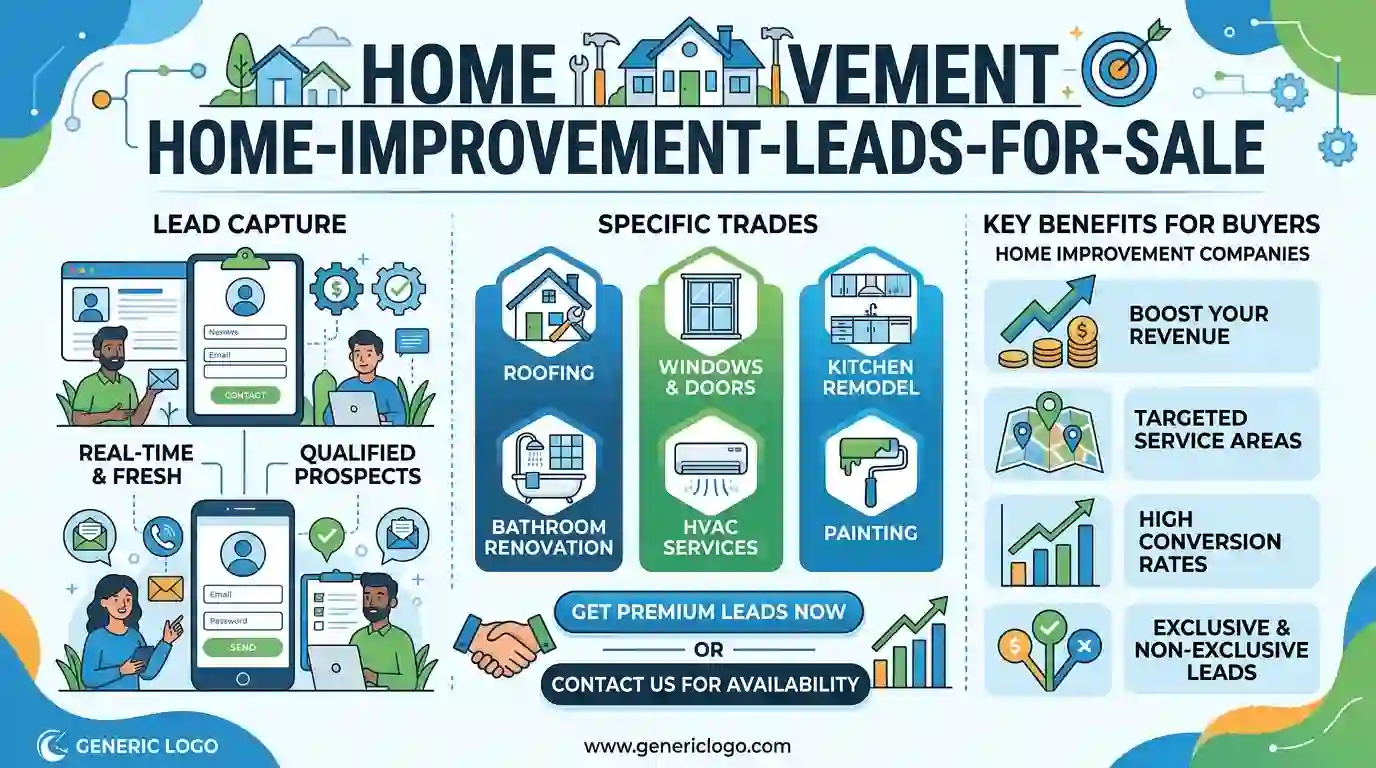
Home improvement leads for sale are homeowner inquiries that contractors can purchase from lead generation companies. These leads connect businesses with people interested in services such as roofing, remodeling, HVAC, flooring, and window replacement. Contractors can buy exclusive or shared leads to find potential customers, increase appointments, and generate more project opportunities.
Thank you for reading this post, don't forget to subscribe!Key Takeaways
- Home improvement leads connect contractors with homeowners planning renovation or repair projects.
- Exclusive leads go to one contractor, while shared leads are sold to multiple businesses.
- Lead prices depend on location, service type, customer intent, and competition.
- Verified contact details and clear project information can improve conversion rates.
- Contractors should test lead providers before committing to expensive contracts.
Home Improvement Leads for Sale
Introduction
Finding homeowners who need renovation or repair services can be challenging for contractors. Advertising, referrals, and social media can generate inquiries, but these methods often require time, consistent effort, and marketing experience. That’s why many businesses search for home improvement leads for sale to connect with potential customers who are already interested in hiring a professional.
Purchased leads can help roofing companies, remodelers, HVAC contractors, plumbers, and other home service businesses find new project opportunities. However, not every lead provider delivers the same quality. Some sell exclusive inquiries, while others distribute the same homeowner’s information to several contractors.
This guide explains how purchased leads work, where to find them, what they cost, and how to evaluate providers. You’ll also learn how to avoid low-quality inquiries and choose leads that make sense for your business.
What Does “Home Improvement Leads for Sale” Mean?
Home improvement leads for sale are contact details and project inquiries from homeowners who may need professional repair, renovation, installation, or maintenance services. Lead generation companies collect these inquiries through websites, online advertisements, landing pages, and other marketing channels.
For example, a homeowner might complete an online form requesting an estimate for a new roof. A lead provider can send that inquiry to a roofing contractor who pays for the opportunity to contact the homeowner.
These leads commonly cover:
- Roofing and roof replacement
- Kitchen and bathroom remodeling
- HVAC installation and repair
- Window and door replacement
- Flooring and painting
- Plumbing and electrical work
- Siding and exterior improvements
- General home renovation
The goal is to help contractors spend less time searching for potential customers and more time discussing actual projects.
Why Buy Home Improvement Leads?
Buying leads can give contractors access to potential customers without building an entire advertising campaign themselves. It can also help businesses enter new service areas or fill gaps in their existing sales pipeline.
Common benefits include:
- Save marketing time: Providers handle much of the advertising and inquiry collection.
- Reach interested homeowners: Some leads come from people actively requesting project estimates.
- Expand local coverage: Contractors can target specific cities, ZIP codes, or service areas.
- Increase sales opportunities: More relevant inquiries can create additional estimates and appointments.
- Control marketing expenses: Pay-per-lead arrangements make it easier to track spending.
However, buying leads does not guarantee booked jobs. Contractors still need fast follow-up, clear estimates, competitive pricing, and good customer service.
10 Best Types of Home Improvement Leads to Buy
1. Exclusive Home Improvement Leads
Meaning: Exclusive leads are homeowner inquiries sold to only one contractor within the agreed distribution terms. This reduces direct competition from other buyers contacting the same prospect.
Best for: Professional, business-focused contractors.
Example 1: A roofing company purchases an exclusive inquiry from a homeowner planning a complete roof replacement.
Example 2: A remodeling contractor receives a private kitchen renovation request in its service area.
Quick Tip: Confirm whether exclusivity applies to the entire market or only a specific time period.
2. Shared Home Improvement Leads
Meaning: Shared leads are distributed to multiple contractors. They usually cost less than exclusive leads, but buyers may compete to contact the same homeowner.
Best for: Budget-conscious and established contractors.
Example 1: Three local flooring companies receive the same request for hardwood installation.
Example 2: Several HVAC businesses contact a homeowner looking for a new air conditioning system.
Quick Tip: Ask how many contractors receive each inquiry before purchasing.
3. Roofing Leads
Meaning: Roofing leads come from homeowners interested in roof repairs, inspections, replacements, or storm-related work.
Best for: Professional roofing contractors.
Example 1: A homeowner requests an estimate after noticing water damage on the ceiling.
Example 2: A property owner wants quotes for replacing an aging asphalt shingle roof.
Quick Tip: Check whether the homeowner needs an inspection, minor repair, or full replacement.
4. Kitchen Remodeling Leads
Meaning: These leads connect remodeling companies with homeowners planning kitchen upgrades. Projects may include cabinets, countertops, flooring, lighting, and complete renovations.
Best for: Professional, formal contractors.
Example 1: A homeowner wants to replace outdated cabinets and install new countertops.
Example 2: A family requests a quote for a complete kitchen redesign.
Quick Tip: Prioritize inquiries that include project scope, estimated budget, and preferred start date.
5. Bathroom Remodeling Leads
Meaning: Bathroom leads involve projects such as shower replacement, bathtub installation, tile work, vanity upgrades, and full bathroom renovations.
Best for: Professional remodeling businesses.
Example 1: A homeowner requests a walk-in shower installation estimate.
Example 2: A property owner wants to replace old bathroom flooring and fixtures.
Quick Tip: Confirm whether the project involves cosmetic updates or major plumbing changes.
6. HVAC Leads
Meaning: HVAC leads come from homeowners interested in heating, ventilation, air conditioning, repairs, or system replacement.
Best for: Professional HVAC companies.
Example 1: A homeowner needs an estimate for replacing an outdated central air conditioning unit.
Example 2: A family requests a heating system inspection before winter.
Quick Tip: Look for the equipment type, property location, and urgency of the request.
7. Window and Door Replacement Leads
Meaning: These inquiries come from homeowners planning to replace damaged, outdated, or inefficient windows and doors.
Best for: Professional installation companies.
Example 1: A homeowner wants quotes for installing energy-efficient replacement windows.
Example 2: A property owner needs a new exterior entry door.
Quick Tip: Ask how many windows or doors the homeowner plans to replace.
8. Bathroom and Kitchen Flooring Leads
Meaning: Flooring leads identify homeowners looking for new flooring materials or professional installation. Projects may involve hardwood, tile, laminate, vinyl, or carpet.
Best for: Professional flooring contractors.
Example 1: A homeowner wants luxury vinyl plank flooring throughout the first floor.
Example 2: A property owner requests a tile installation estimate for a kitchen renovation.
Quick Tip: Check the approximate square footage before calculating project value.
9. Painting Leads
Meaning: Painting leads connect contractors with homeowners seeking interior or exterior painting services.
Best for: Professional and small painting businesses.
Example 1: A homeowner needs the exterior of a two-story house repainted.
Example 2: A property owner requests an estimate for painting several bedrooms.
Quick Tip: Confirm the number of rooms, surface condition, and whether preparation work is required.
10. General Home Renovation Leads
Meaning: These leads cover broader residential improvement projects that may involve several services, including remodeling, repairs, upgrades, and installations.
Best for: Professional general contractors.
Example 1: A homeowner wants to renovate an older property before moving in.
Example 2: A family requests an estimate for updating several rooms.
Quick Tip: Review the complete project description to determine whether it matches your company’s licenses, skills, and capacity.
Comparison Table
| Lead Type | Best Used In | Tone / Lead Focus |
|---|---|---|
| Exclusive home improvement leads | Competitive local markets | Private, targeted |
| Shared home improvement leads | Lower-cost campaigns | Budget-friendly |
| Roofing leads | Roof repairs and replacements | Project-specific |
| Kitchen remodeling leads | Kitchen upgrades | High-value projects |
| Bathroom remodeling leads | Bathroom renovations | Project-specific |
| HVAC leads | Heating and cooling services | Urgent or planned |
| Window and door leads | Replacement and installation | Product-focused |
| Flooring leads | Residential flooring projects | Installation-focused |
| Painting leads | Interior and exterior painting | Service-focused |
| General renovation leads | Full-home improvements | Broad and flexible |
How Much Do Home Improvement Leads Cost?
The price depends on the type of service, location, competition, lead quality, and whether the inquiry is exclusive or shared.
Here are some publicly advertised examples from lead providers:
| Lead pricing example | Advertised price |
|---|---|
| Shared home improvement leads | $20–$50 |
| Exclusive qualified leads | $75–$200+ |
| Organic home improvement leads | $54.99 |
| Google Ads leads | $62–$431 |
These are provider-reported prices, not guaranteed national averages. Actual quotes can differ significantly by trade and ZIP code. pineconeleads.com+1
Before buying, calculate your potential return rather than choosing the cheapest option.
For example, if you purchase 20 leads at $50 each, your total lead expense is $1,000. If two customers eventually hire you, your lead cost per acquired customer is $500, before labor, materials, advertising, and other business expenses.
This calculation helps you decide whether a particular lead source makes financial sense.
Where to Buy Home Improvement Leads
Several types of platforms can connect contractors with homeowners.
1. Dedicated lead generation companies
Companies such as 99 Calls provide exclusive home improvement inquiries through online marketing channels. Its published information includes lead generation through organic search, Google Ads, and Local Services Ads. Exclusive
2. Contractor lead marketplaces
Platforms such as Angi and Thumbtack connect homeowners with service professionals. Compare their lead distribution, payment arrangements, and customer contact rules before spending money.
3. Specialized lead providers
Some providers focus on specific industries, such as roofing, windows, bathroom remodeling, or HVAC. This can help contractors find inquiries that better match their services.
4. Direct lead generation agencies
An agency can manage advertising campaigns and generate inquiries for your business. Depending on the agreement, you might pay per lead, a monthly fee, or advertising costs plus management fees.
Always review the provider’s actual terms rather than relying only on marketing claims.
How to Choose a Reliable Lead Provider
A good lead provider should explain exactly what you are purchasing. Before signing an agreement or paying for a package, review these important details:
- Lead verification: Does the provider check phone numbers, project details, and homeowner information?
- Exclusivity: Is the inquiry sold to one contractor or several?
- Geographic targeting: Can you choose specific cities and ZIP codes?
- Delivery speed: How quickly does the provider send new inquiries?
- Refund policy: What happens when a number is disconnected or the inquiry falls outside your agreed criteria?
- Consent records: Can the provider show how and when the homeowner agreed to receive calls or messages?
- Reporting: Can you track lead volume, appointments, sales, and conversion rates?
Ask for a small trial before purchasing a large package. A limited test can reveal whether the leads match your service area, project requirements, and sales capacity.
Common Mistakes When Buying Home Improvement Leads
1. Choosing the cheapest leads
Low prices may look attractive, but poorly matched inquiries can waste your sales team’s time. Compare lead quality and customer acquisition costs instead of focusing only on price.
2. Ignoring shared lead competition
A shared inquiry may reach several contractors. If you contact the homeowner too slowly, another business might book the estimate first.
3. Failing to check homeowner intent
Someone researching renovation prices may not be ready to hire. Ask whether the homeowner wants an estimate, plans to start soon, or is simply gathering information.
4. Buying leads outside your service area
An inquiry from a distant ZIP code may create unnecessary travel costs. Set geographic restrictions before placing an order.
5. Expecting guaranteed sales
Buying a lead does not guarantee an appointment, signed contract, or completed project. Your pricing, reputation, communication, and follow-up still matter.
Frequently Asked Questions
1. Where can I buy home improvement leads?
You can buy home improvement leads from dedicated lead generation companies, contractor marketplaces, and digital marketing agencies. Some providers specialize in roofing, HVAC, or remodeling, while others offer multiple home service categories. Compare pricing, exclusivity, verification, and replacement policies before choosing a supplier.
2. How much do home improvement leads cost?
Prices vary by service, location, competition, and lead quality. Shared leads may cost less than exclusive inquiries, while specialized replacement projects can cost considerably more. Ask providers for current pricing in your ZIP codes and calculate your customer acquisition cost before purchasing.
3. Are exclusive home improvement leads worth buying?
Exclusive leads can be worthwhile because you do not compete with multiple contractors receiving the same inquiry. However, exclusivity does not guarantee that a homeowner will answer, schedule an estimate, or purchase your services. Evaluate the actual conversion rate before increasing your budget.
4. What is the difference between exclusive and shared contractor leads?
Exclusive contractor leads are sold to one business under the provider’s exclusivity agreement. Shared leads are distributed to multiple contractors, creating more competition for the same homeowner. Shared inquiries may have lower upfront costs, while exclusive inquiries offer greater control over the sales opportunity.
5. Which home improvement leads are the most valuable?
The most valuable leads depend on your business model, project margins, and closing ability. Roofing replacements, kitchen renovations, bathroom remodeling, and HVAC installations can involve substantial project budgets. However, a smaller project with a higher conversion rate may deliver a better return.
6. How quickly should contractors contact new leads?
Contact homeowners as soon as reasonably possible after receiving an inquiry. A quick response helps you reach people while they remember requesting information. Use phone calls, texts, or emails according to the homeowner’s consent and applicable communication laws.
7. Can small contractors afford to buy home improvement leads?
Yes. Small contractors can start with a limited lead budget and test a few inquiries before increasing spending. They should focus on one service category and a manageable geographic area. This approach makes it easier to measure costs, follow up consistently, and evaluate profitability.
8. What should I check before purchasing contractor leads?
Check the homeowner’s contact information, project type, location, timeline, and lead distribution terms. Also review the provider’s refund or replacement policy and request proof of consent for marketing communications. These checks can help reduce wasted spending and avoid unnecessary compliance risks.
Conclusion
Buying home improvement leads can help contractors connect with homeowners who need professional renovation, installation, and repair services. However, choosing the right provider matters more than simply purchasing a large number of inquiries.
Start by identifying the projects you want, such as roofing, kitchen remodeling, HVAC installation, or window replacement. Then compare exclusive and shared leads, review pricing, and check the provider’s verification and replacement policies.
If you’re new to buying leads, begin with a small test order. Track how many homeowners answer, schedule estimates, and become paying customers. Use those results to calculate your actual acquisition costs.
Ultimately, the best home improvement leads are not necessarily the cheapest or most expensive. They are the inquiries that match your services, reach your target customers, and help your business earn profitable projects.

I am Nicholas Sparks, a storyteller who believes in the power of love, emotions, and unforgettable moments. Through my novels, I try to capture the beauty of relationships and the depth of human feelings.
My stories are about passion, hope, and the journeys that shape our hearts. Learn more romantic inspirations and heartfelt stories at flirtzdream.com.